When Giants Rise: Exploring the Radiative Effect of Super-Coarse Dust
Blog post from Ginés Garnés Morales
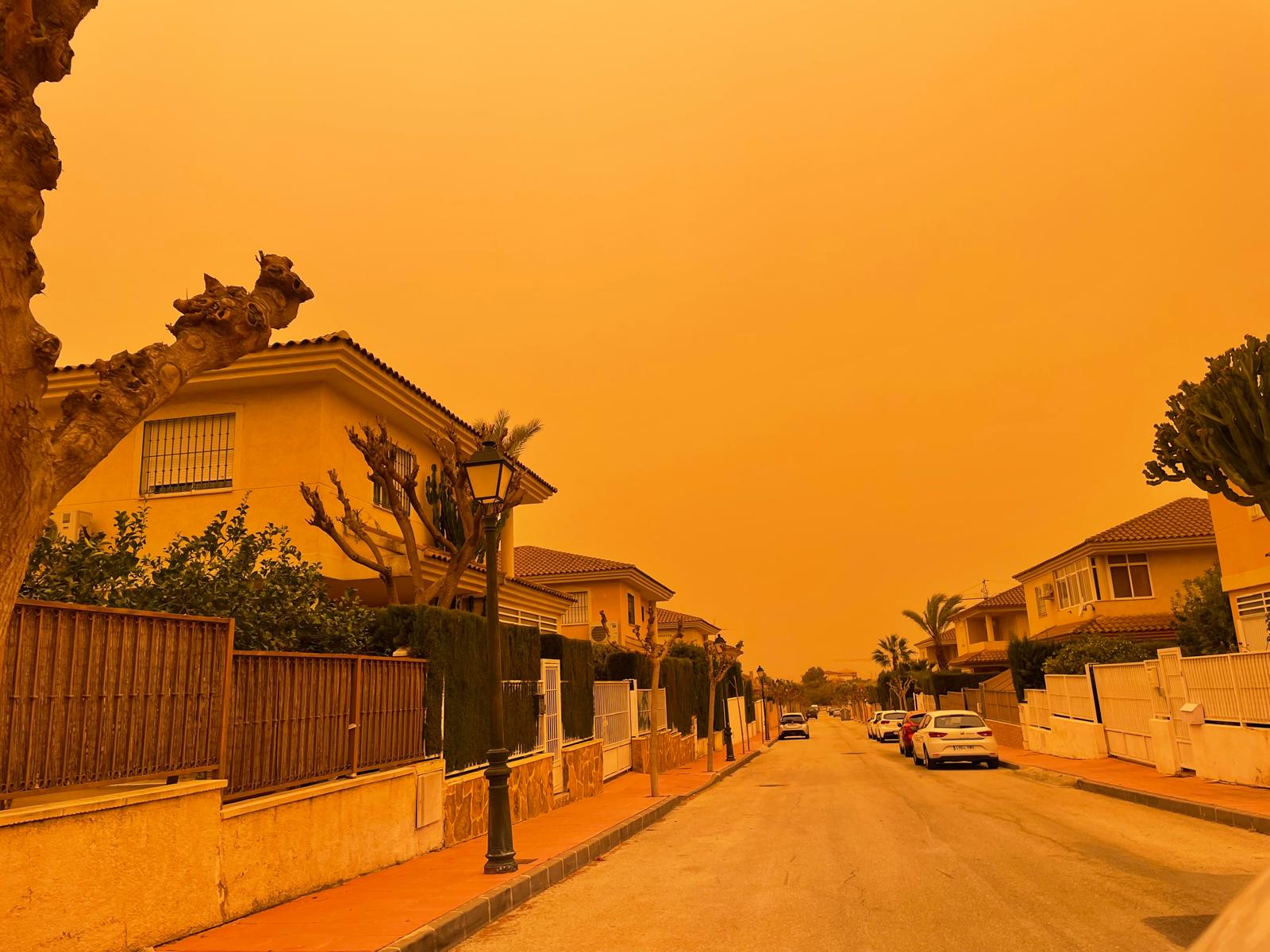
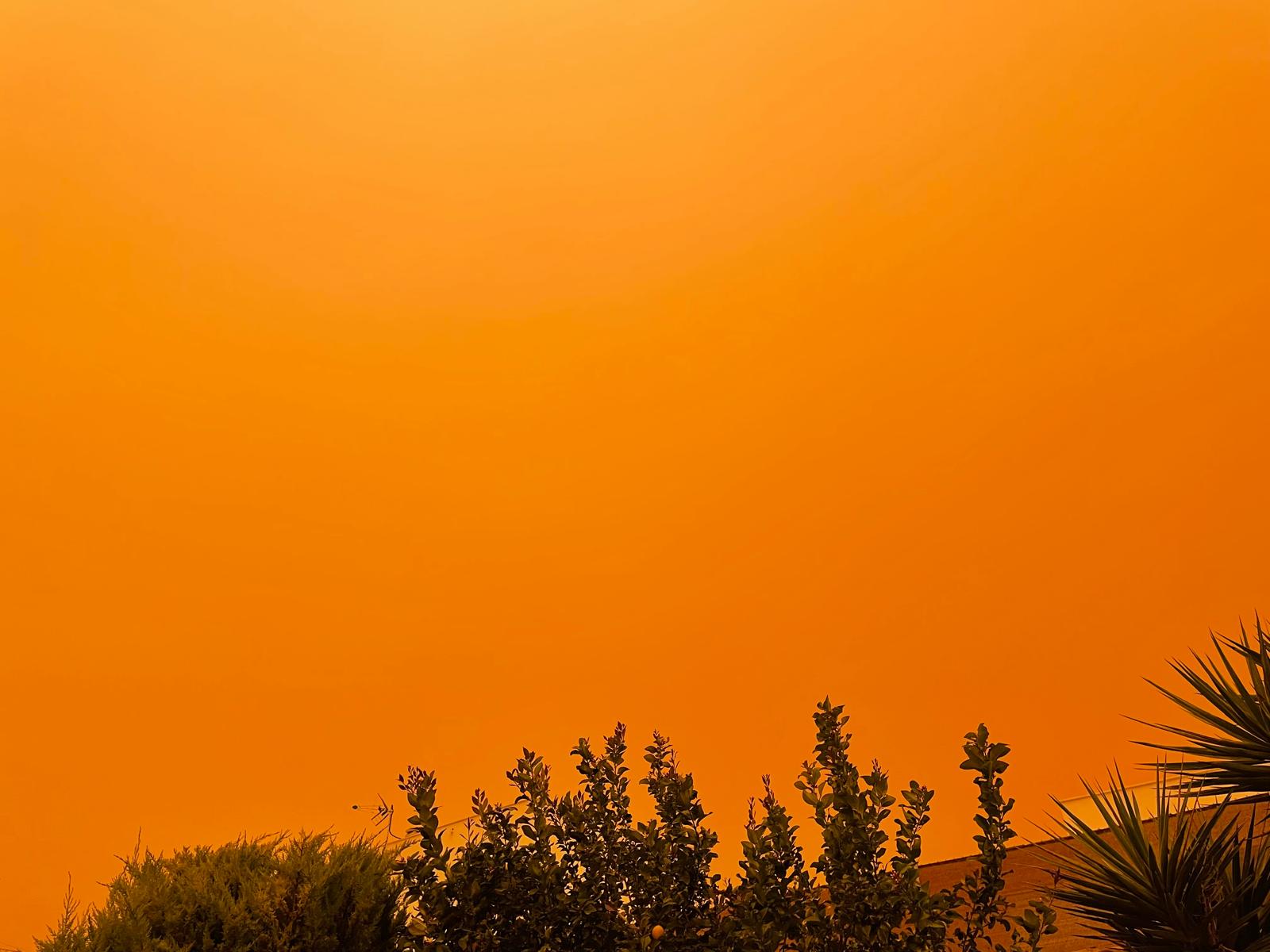
Originally from southeastern Spain, Saharan dust intrusions are a common phenomenon in my region. These episodes often lead to hazy skies, sometimes producing striking orange hues that make it feel as if you are on Mars (see Figure 1). Most people in my hometown (Murcia) do not exactly welcome dust with their arms wide open, as they can expect dust rain (more popularly called muddy rain) to come, with all surfaces getting dirty—car-washing runners may be quite happy with this, though. Moreover, extreme intrusions can pose health risks, especially to vulnerable populations or individuals with pre-existing respiratory conditions.
As a physicist with a Master’s degree in Meteorology, I find it quite exciting to analyse dust events from a scientific perspective. Not only do these particles affect visibility and air quality, but they also have a significant impact on weather and climate by altering cloud formation and the radiative balance. Solar radiation does not pass through the atmosphere passively, but interacts with particles, gases, and aerosols, including mineral dust, that are suspended within the atmosphere. These elements have direct radiative effects, including scattering and absorption processes, on both shortwave and longwave radiation. Despite their relatively small size, they play a crucial role in the Earth’s energy budget and, consequently, in the global climate. Recent studies have suggested that super-coarse dust—dust particles larger than 10 microns in diameter—are often overlooked, leading to uncertainties regarding the true direct radiative effects of dust. My PhD project aims to analyse the role of super-coarse dust in these dust-radiation interactions and to assess its influence on warming/cooling the planet.
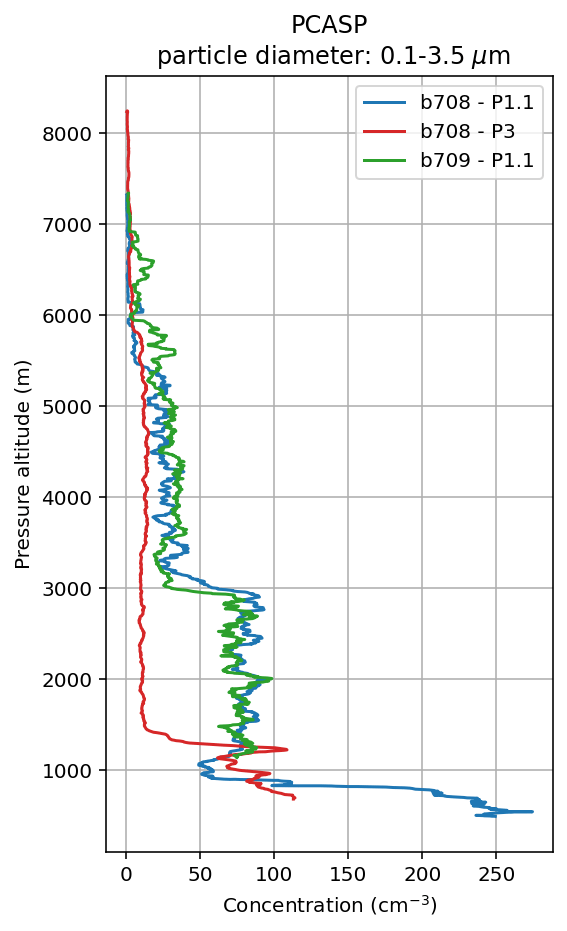
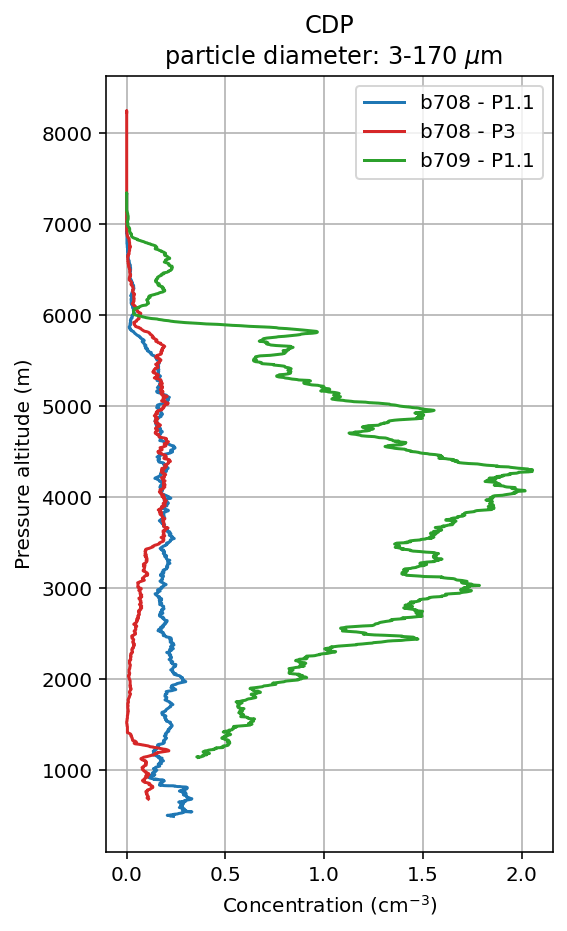
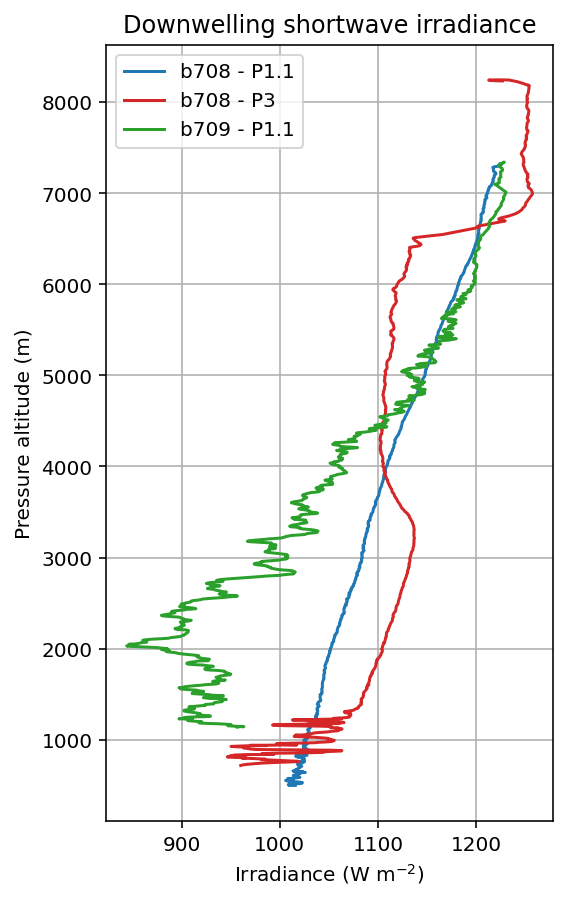
During my first year as a Dust-DN doctoral candidate, I am based at the University of Reading, where I have been analysing data from the FAAM research aircraft dataset collected during the Fennec 2012 field campaign over the Sahara. This dataset offers the rare opportunity of having in-situ measurements of dust simultaneously with radiometric data, and therefore the opportunity of closing the radiative balance. So far, I have focused on the flights b708 and b709, which specifically targeted radiative processes. Figures 2a and 2b displays the total concentration of particles measured by a passive cavity aerosol spectrometer probe (PCASP) and a cloud droplet probe (CDP), respectively, along the three deep profiles the aircraft conducted in b708 (2 profiles) and b709 (1 profile). These two instruments cover different particle sizes, which allows us to know the amount of fine and coarse dust in the atmosphere. Figure 2c illustrates the downwelling shortwave irradiance for the same three profiles. A visual inspection of these measurements and other results suggests that radiation shows a certain response to the presence of super-coarse dust, even though its concentration is much lower than that of fine dust. In the future, I plan to run radiative transfer models to properly quantify the impact of super-coarse dust on the radiative closure.
Working with aircraft observations presents challenges due to the influence of both spatial and temporal variations in atmospheric conditions. In this context, having lidar data or satellite images is very useful for a more comprehensive understanding. I am looking forward to my secondment at the Cyprus Institute, where I will learn about the lidar technique and how to apply inversion algorithms to retrieve extinction coefficient profiles from raw lidar data (range-corrected signal). During my second and third years, I will be based in Évora, where I will focus on the modelling aspects of the research.
The Dust-DN project provides an ideal environment for my PhD, allowing me to learn state-of-the-art methods in dust research alongside motivated peers and prominent scientists in the field. I am eager to contribute to the scientific community, giving my best to provide new insights into the direct radiative effects of dust and its role in the climatic system.